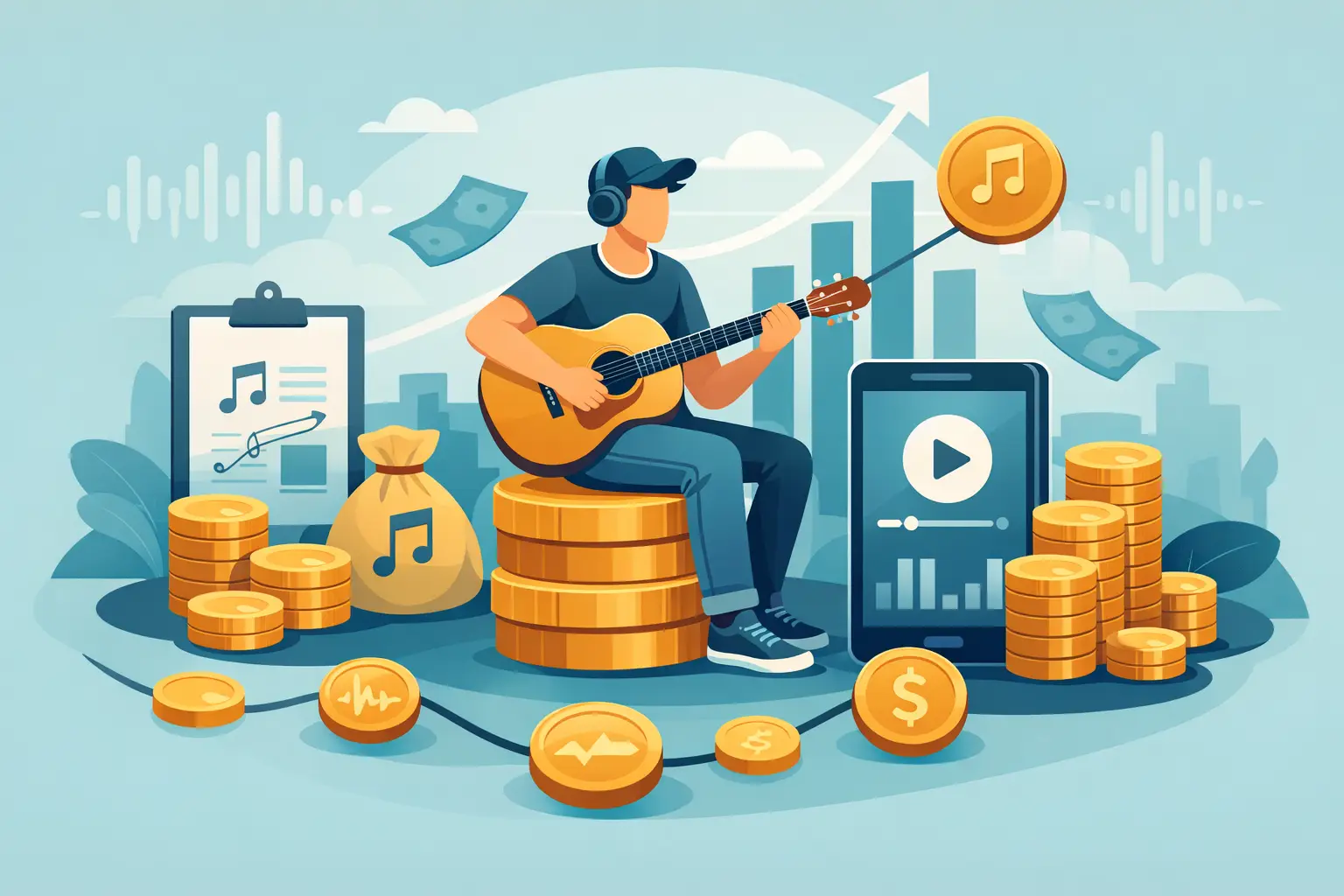
A listener presses play because a song hits at the right moment. Maybe it is the rhythm, a line that sounds like their own life, or the feeling that an artist is saying something real. Behind that one play, music royalties begin their slow journey through platforms, distributors, publishers, and rights organizations.
For an independent artist, understanding that journey matters. A release is not only a statement of purpose. It is also intellectual property that can keep earning when the rights are organized, the credits are accurate, and the right people are collecting what the music has generated.
What music royalties actually pay for
Music royalties are payments made when copyrighted music is used. That use can be a stream on Apple Music, a radio play, a live performance, a download, a video placement, or a song played in a store. The amount may be small for one use, but songs are built to travel. A record can reach someone across the world long after release day.
Every original song usually contains two separate copyrights. The first is the composition – the lyrics, melody, and underlying musical work. The second is the sound recording, often called the master – the actual recorded performance a listener hears.
Those two rights can belong to the same person, but they do not have to. An artist may own the master while sharing the composition with a producer, songwriter, or collaborator. This is where clarity becomes more than paperwork. If the people who made the song do not agree on ownership early, money and relationships can get complicated later.
For a creator building from the ground up, ownership is part of the long game. A song created from real struggle, ambition, and lived experience should have a clear path back to the people who gave it life.
Streaming royalties are not a fixed price per play
Many artists ask the same question after a release: how much is one stream worth? The honest answer is that there is no universal number. Streaming services do not generally pay artists a simple fixed rate per play. Revenue is influenced by a platform’s subscription and advertising income, listener location, plan type, total streams, rights agreements, and distribution arrangements.
A platform pays rights holders, and the money then moves through the businesses and administrators connected to the release. For the master side, an independent artist commonly receives digital streaming revenue through a distributor. The distributor may keep a fee or percentage depending on the deal.
The composition side follows a different route. Publishing royalties connected to interactive streaming can be collected by a publisher, publishing administrator, performance rights organization, or mechanical licensing entity. If an artist writes their own songs, they may be entitled to income on both sides. If they only perform a song written by someone else, their share will be different.
That distinction is why a growing streaming number feels good but should not be treated like instant cash. Royalties often arrive months after the listening happens. Reporting schedules vary, foreign income can take longer, and each company has its own processing timeline. Patience is part of independent music, but patience works better when paired with accurate records.
The royalty types artists should know
Master recording royalties come from use of the recorded track. Streams, downloads, and certain licenses can generate master income for the owner of the recording. For an artist who funds and releases their own music, this is often the most visible revenue line because it appears in distributor statements.
Performance royalties belong to the composition. They can be generated when a song is performed publicly through radio, live venues, television, digital services, and other qualifying uses. Songwriters and publishers receive these payments through performance rights organizations.
Mechanical royalties are also composition income. They arise when a song is reproduced or distributed, including through many digital streaming uses. In the United States, eligible digital mechanical royalties are handled through specific licensing systems, while publishers or administrators may handle other territory and catalog needs.
Then there are neighboring rights and digital performance royalties for sound recordings. These are especially relevant when music is played by non-interactive digital radio services, where listeners cannot choose an exact song on demand. This is different from an on-demand stream, so an artist should not assume that one registration captures every use.
Sync royalties come into play when music is paired with visual media. A song in a film, series, ad, game, or creator campaign may require licenses for both the master and the composition. Sync can be meaningful income, but it is not automatic. Music supervisors and brands need clean ownership, quick responses, and a record that fits the emotional direction of their project.
Credits and splits protect the song before it earns
The best time to talk about splits is before the release is uploaded, while the studio session is still fresh in everyone’s mind. A producer may have contributed a beat, arrangement, or melody. A friend may have written a hook. A featured artist may have changed the song with one unforgettable line. Those contributions can carry ownership implications.
A split sheet records who owns what percentage of the composition and, where relevant, the master. It should include legal names, contact details, performing rights organization information, and agreement on percentages. It does not need to be dramatic. It needs to be honest and signed.
Metadata matters just as much. Song title, artist name, songwriter names, producer credits, ISRC, release date, and ownership details should match across registrations and distributor uploads. A misspelled name or missing writer can delay payments or leave money unmatched in a system. The music business is creative, but its payment systems depend on details.
If a song uses a sample, interpolation, leased beat, or borrowed melody, do not treat clearance as something to solve after the record gains attention. The trade-off may be that clearing a sample costs money or changes a release plan. The greater risk is releasing without permission and finding that the song’s momentum becomes a legal problem instead of a breakthrough.
A practical setup for independent releases
An artist does not need a major-label team to take royalty collection seriously. They do need a consistent release process. Before a track goes live, confirm who owns the master, settle songwriting splits, keep the final agreements, and make sure every contributor is properly credited.
After the release is delivered through a distributor, the master revenue should be tracked in the distributor dashboard and accounting records. Songwriters should also register compositions with the appropriate organizations and consider whether a publishing administrator is worth the cost. It depends on the catalog. For one early release, managing it directly may feel manageable. For a growing catalog across multiple territories, an administrator can reduce missed collections and administrative stress.
Keep a simple royalty folder for each song. Store the final master, instrumental, clean version if available, lyric sheet, cover art, split sheet, contracts, registration confirmations, and release metadata. This preparation helps with royalty questions, sync opportunities, and future versions of the record.
It also helps to separate art money from personal spending. Even modest royalty payments can support the next mix, visual, marketing push, or performance. Reinvesting is not glamorous, but it is how momentum becomes a catalog instead of a one-song moment.
Why a catalog matters more than one viral week
A viral clip can introduce an artist to thousands of people. A catalog gives those people somewhere to go next. When a listener finds a record like “Loose Guard” or “Changed Man,” they should be able to hear more of the story – different moods, stronger writing, and proof that the artist has more to say.
That is also how royalties compound. One track may earn a little from streaming. Several connected releases can earn across more playlists, more searches, more repeat listeners, and more performance opportunities. A full-length project gives fans time to stay with the artist, while singles keep the relationship active between larger moments.
The goal is not to chase a payout from every play. The goal is to create music people return to because it reflects something true. When the rights are protected and the songs are organized, every return listen has a better chance of honoring both the listener’s connection and the creator’s work.
Leave a Reply