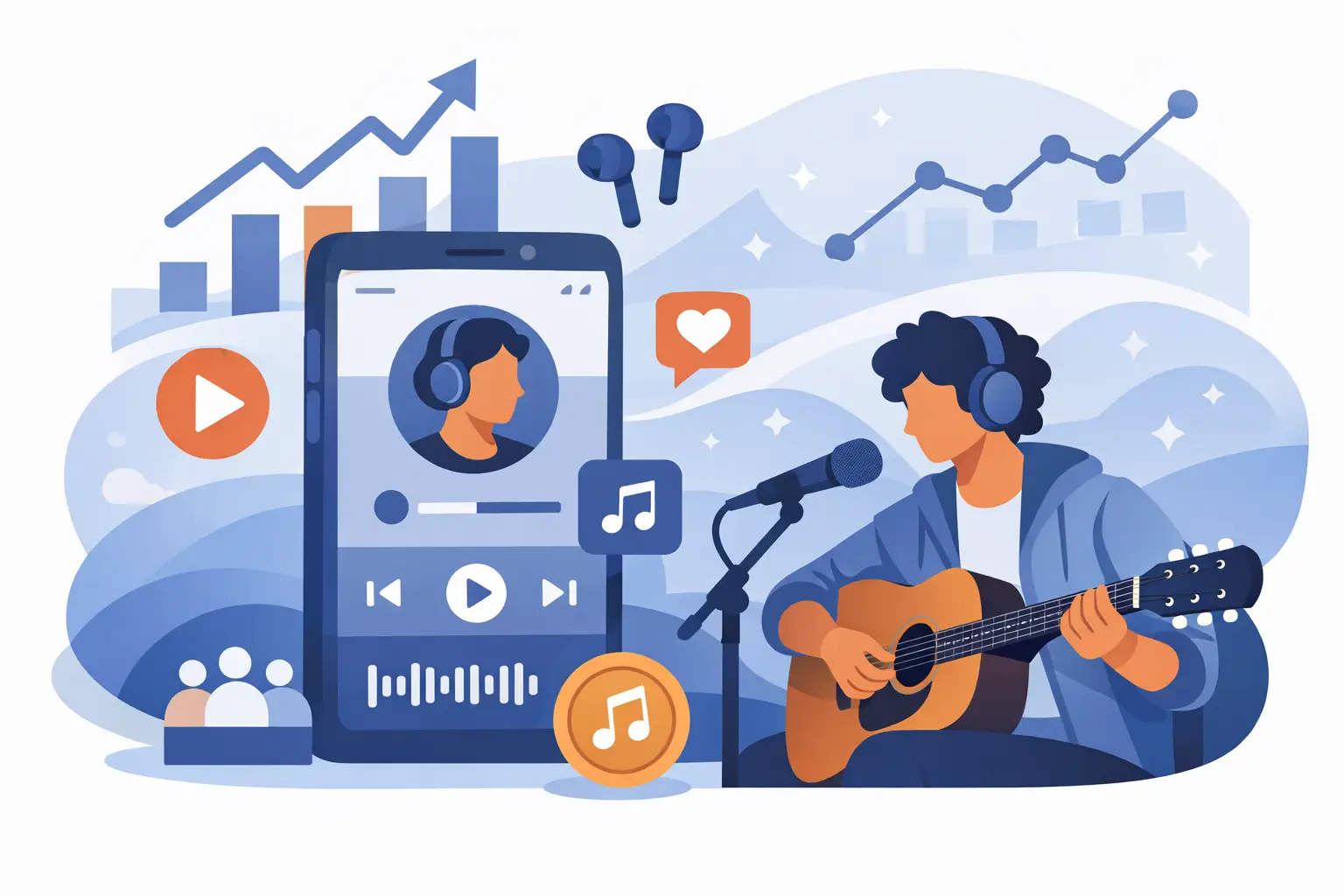
A stream can be a quick tap, but the listener behind it can become part of a much bigger story. That is the real opportunity behind streaming trends for emerging musicians. For independent Afro-Beat artists, growth is no longer only about getting music onto platforms. It is about giving people a reason to return, save a song, share it with a friend, and follow the journey from the first release to the next chapter.
The numbers still matter. But a listener who feels something from a record matters more than a random spike that disappears by Friday. Emerging artists have more access to global listeners than ever, yet that access also makes intention essential. The artists building lasting momentum are pairing consistent releases with clear identity, smart platform habits, and music that says something real.
Streaming Trends for Emerging Musicians: Depth Beats Noise
The old dream was a viral moment that changed everything overnight. Viral moments can help, but they are unpredictable and often shallow. A song can collect thousands of plays because of one clip, then lose most of its audience when the trend moves on.
A healthier goal is depth: listeners who save tracks, add them to personal playlists, listen again, and explore the rest of the catalog. Those actions tell streaming platforms that a song has a place in someone’s life. They also tell the artist which direction is connecting beyond the first impression.
For an Afro-Beat artist, this may mean that a melodic chorus reaches a new listener first, while the honest verses or the rhythm bring them back. The first play earns attention. The second and third play build familiarity. Over time, familiarity becomes loyalty.
This does not mean chasing big moments is a mistake. It means treating exposure as an introduction, not the finish line. When people arrive at an artist profile, they should find a world worth staying in: current singles, a recognizable sound, strong visuals, and a story that feels human.
The Single Is Still the Front Door
Albums remain important, especially when an artist has a full story to tell. But singles are often the easiest entry point for a new fan. They give an emerging musician repeated chances to appear in release feeds, playlists, search results, and conversations.
The strongest release schedules balance consistency with quality. Releasing every week can exhaust an artist and confuse listeners if the music is not ready. Waiting a full year between songs can make it harder to hold the attention that has already been earned. For many independent artists, a deliberate run of singles creates enough activity to stay visible while allowing each track room to breathe.
Each release should have its own purpose. One song may introduce a brighter, dance-forward side. Another may be more reflective, built around struggle, love, pressure, or ambition. Together, those songs give listeners different doors into the same artist identity.
That approach also makes a later album feel more meaningful. Instead of appearing out of nowhere, the project becomes the place where fans can hear the wider picture. A catalog with both focused singles and a full-length statement gives people a reason to keep browsing after they find the first song they like.
Platform Signals Come From Real Listener Behavior
Streaming platforms use different systems, and no artist outside the platform can fully control them. Still, certain listener actions tend to carry more value than a passive play. Saves, library adds, repeat listening, playlist additions, follows, and full-song completion all suggest that the music is landing.
The practical lesson is simple: ask people to engage in ways that feel natural. A post that says, “Save this if it speaks to where you are right now,” is more personal than a generic demand for streams. A short message about why a lyric was written can give listeners a reason to hear the song again with fresh attention.
Timing matters too, but it is not magic. Releasing when the artist has time and energy to talk about the song is usually better than dropping a track during a quiet period. The first days of a release are a chance to gather early signals, answer listeners, share the story behind the record, and make the song feel alive.
Do not focus only on daily stream totals. Look for patterns. Which track has the best save rate? Which city keeps returning? Are listeners finding one song and then moving into older releases? Those answers can shape the next release, future visuals, and even where live opportunities may make the most sense.
Story Is Becoming Part of the Listening Experience
Listeners, especially younger listeners, do not only want a clean release graphic and a caption that says “out now.” They want to know who is behind the song. They notice the distance between music that feels manufactured and music that sounds like it came from a real life.
For emerging musicians, personal storytelling is not extra promotion. It is part of the product. A few honest sentences about a hard season, a turning point, or the feeling that created a song can make a listener hear it differently. The story should not be forced or overly polished. It should sound like the artist.
That is especially powerful in Afro-Beat and global pop spaces, where rhythm can bring people together across language and geography. The feeling can travel first. Then the meaning gives people a reason to claim the song as their own.
Rixk Nj’s catalog approach offers a useful example: recurring singles can keep the conversation moving, while a project such as Don’t Sleep on Me gives the personal journey a larger frame. A title, track sequence, and consistent message can turn separate releases into evidence of growth.
Short-Form Content Works Best When It Extends the Song
Short clips continue to influence discovery, but artists do not need to perform for every trend. The better question is whether a piece of content gives a listener another way into the music.
A chorus clip can work when the hook is immediate. A studio moment can work when it shows the energy behind a performance. A direct-to-camera explanation can work when a lyric has a story that deserves context. The best choice depends on the song and the artist’s comfort on camera.
Avoid posting content that has no relationship to the record just because it might get views. Attention from the wrong audience can create a hollow number. It is more valuable to reach fewer people who recognize themselves in the song and want to hear the full version.
Consistency also does not mean repetition. An artist can share the same song through different angles: the writing process, the meaning of a line, a live performance, a fan reaction, or a simple moment of reflection. The music stays at the center while the audience gets more reasons to care.
Global Reach Needs Local Listening
Streaming has made it possible for an independent artist in one place to reach listeners across the United States, Africa, Europe, the Caribbean, and beyond. Afro-Beat has a natural advantage here because its rhythms already move across borders. But global reach should not become vague reach.
Pay attention to where the music is actually resonating. If listeners in a particular city or country are saving and replaying songs, speak to them with genuine gratitude. Learn what songs are working there. When performance opportunities come, those audience pockets may matter more than a large but scattered stream count.
At the same time, do not bend the sound so far toward a perceived market that the artist loses the reason listeners came in the first place. A broader audience can grow around authenticity. Chasing every regional preference can weaken the core.
Build a Catalog That Rewards Curiosity
One strong song can introduce an artist. A thoughtful catalog keeps that listener around. This is why emerging musicians should think beyond the next release date.
Make the artist profile feel current. Keep titles, credits, artwork, and release information accurate. Let every song contribute to a recognizable emotional and sonic direction, even when the production changes. A listener who enjoys a confident record should be able to find another song that carries some related feeling, whether it is hope, heartbreak, resilience, or celebration.
There is room to experiment. In fact, experimentation is part of finding a lasting sound. The trade-off is that too many disconnected ideas can make it hard for new listeners to understand who the artist is. Growth comes from testing new colors while keeping the center clear.
The next important stream may come from a playlist, a search, a friend’s recommendation, or a 15-second clip. What happens after that depends on whether the music gives someone a reason to stay. Keep releasing with purpose, tell the truth behind the songs, and let every new listener feel that they found an artist on the way up.
Leave a Reply