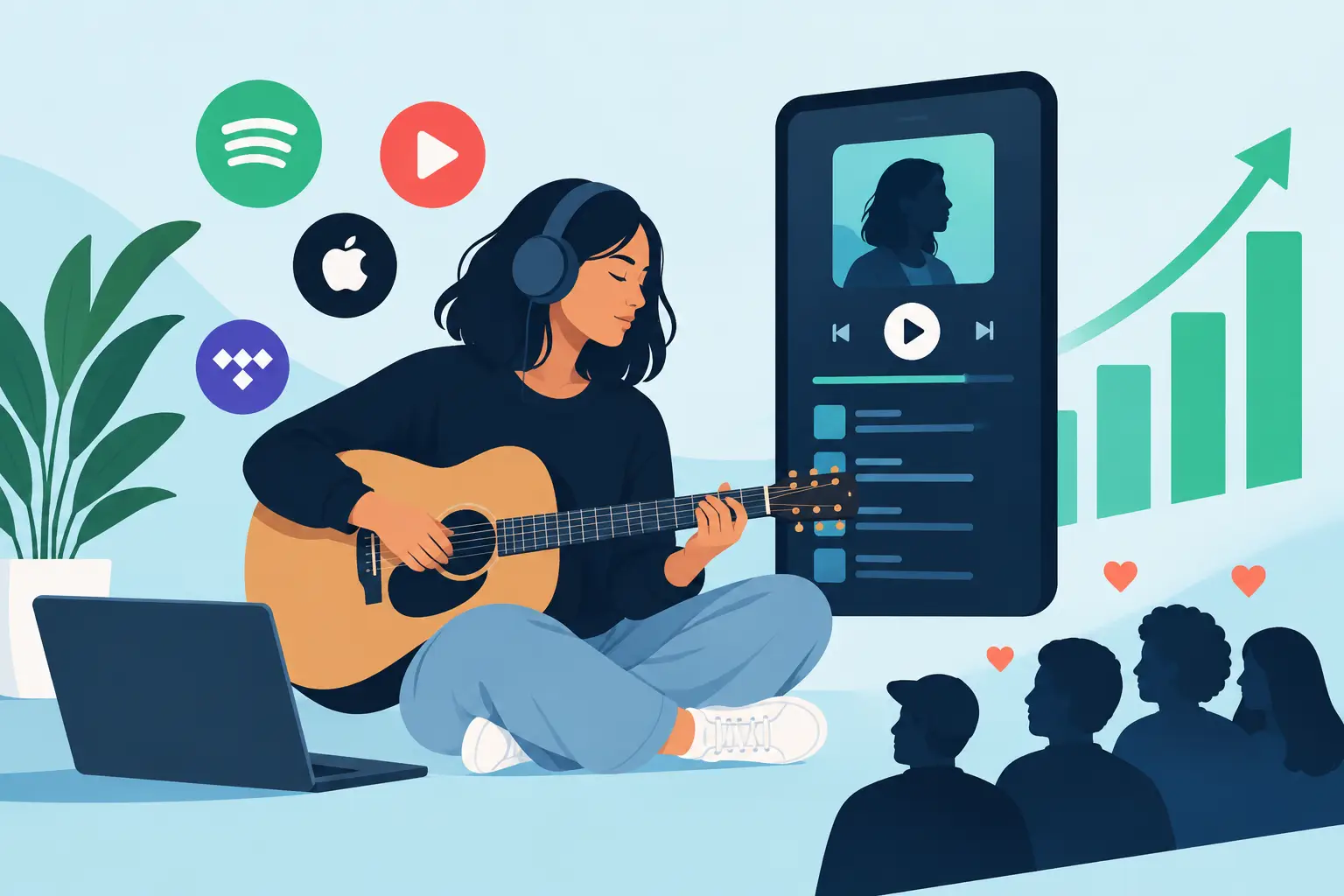
A song can reach someone’s headphones before they know an artist’s name, hometown, or story. That is the opportunity inside today’s streaming trends – but it is also the pressure. There is more music available than any listener could ever finish, so being present is not the same as being heard.
For emerging Afro-Beat artists, the shift is bigger than chasing a viral moment. The listeners who stay are looking for rhythm, yes, but also feeling. They want music that fits the drive home, the late-night reflection, the party, the breakup, and the plan they are still fighting to make real. The artists building real momentum understand that a stream is not the finish line. It is an introduction.
Streaming Trends Are Making Discovery More Personal
Discovery used to feel more gatekept. Radio, label budgets, television, and a few major tastemakers could determine which records traveled. Streaming has not removed gatekeepers completely, but it has created more entry points. A listener can find a new song through a playlist, an autoplay recommendation, a friend’s shared track, a short clip, a search, or by letting one good record lead into another.
That variety favors artists who give people a reason to keep listening after the first song. A clean beat may earn the first play. A memorable hook may earn the replay. But the voice, perspective, and emotional truth are what make someone open the artist page and explore the catalog.
This matters for Afro-Beat because the sound is global, flexible, and full of movement. It can carry joy and pain in the same record. It can feel bright on the surface while saying something heavier underneath. Listeners who connect with that balance are not only chasing a genre label. They are responding to personality.
The strongest artist profiles make the music feel connected, even when every release has its own mood. A romantic record, a record about pressure, and a record about growth can all belong to the same world when the artist’s point of view is clear. People do not need every song to sound identical. They need to recognize the person speaking through it.
Consistency Beats Constant Noise
One of the most misunderstood streaming trends is the idea that artists must release music nonstop. Frequent releases can help a catalog stay active, especially for an independent artist without a huge marketing machine. But constant output with no intention can make songs feel disposable.
Consistency is not the same as rushing. It means giving listeners a pattern they can trust: a new single when there is something worth saying, clear artwork, a strong identity, and enough time for each record to breathe. Some songs catch immediately. Others build slowly as listeners save them, add them to playlists, and return when the lyrics begin to mean more.
A single can introduce a new side of an artist. An album can show the full range. Both have a role. Singles create repeated moments of discovery, while a larger project gives dedicated listeners somewhere deeper to go. That balance is especially useful for a developing artist, because new listeners may enter through one track while early supporters want proof that there is a real body of work behind it.
Rixk Nj’s catalog approach reflects that reality: individual releases can hold their own, while a project such as Don’t Sleep on Me gives the wider story more room. The goal is not to flood listeners. It is to leave enough music behind for a first connection to become a longer relationship.
The Save Matters More Than the Scroll
Not every meaningful signal is loud. A song might not explode in a day and still be doing important work. When someone saves a track, adds it to a personal playlist, returns to it later, or plays other songs from the same artist, that is a deeper form of interest than a passing view.
That is why artists should think beyond the first few seconds of a record. The opening matters, but so does the payoff. Does the song give the listener a line they want to repeat? Does the melody stay with them after the track ends? Does the production support the emotion instead of burying it? Is there a reason to play it again tomorrow?
Listeners have become more selective because their choices are endless. They may skip quickly, but they also reward records that fit a real moment in their lives. A song about disappointment can become someone’s private reset. A record about ambition can become part of their workout or their morning routine. Music earns longevity when it becomes useful emotionally, not just visible socially.
Artist Story Is Part of the Listening Experience
People connect differently when they understand what is behind the music. They do not need a perfect biography or a dramatic story manufactured for attention. In fact, audiences are quick to feel when an artist is forcing a narrative. What they respond to is a voice that sounds human.
For an artist still building, honesty is an advantage. Talk about the road, the work, the doubts, the vision, and the reason the music exists. Let listeners see the ambition without pretending the destination has already been reached. There is power in saying, in effect, “I am still becoming, and these songs are part of that journey.”
That kind of openness gives songs context. A title like “Changed Man” can land differently when listeners know the artist is writing from growth rather than posing. A track like “Breakfast” can feel more personal when it is part of a larger world rather than just another upload in an endless feed.
The trade-off is that artists still need boundaries. Being authentic does not mean sharing every private detail. It means being truthful about the emotions that shape the work. The best stories leave room for listeners to find themselves in the music too.
Global Reach Needs Local Feeling
Streaming allows a record made in one place to find listeners across the world. That possibility has helped Afro-Beat travel far beyond any single market. Yet global reach does not require an artist to flatten their identity into something generic.
The songs that travel often have a specific point of view. A familiar emotion can cross borders, but it becomes memorable through detail: the cadence, the language, the rhythms, the vulnerability, and the cultural confidence in the performance. Trying to sound like everyone else may create a safer first impression, but it rarely creates a lasting one.
At the same time, artists should pay attention to how different audiences listen. One group may find a song through upbeat playlists, while another connects with the reflective lyric. One record might move at parties; another may grow through headphones and late-night repeat plays. There is no single perfect audience behavior, which is why a varied catalog can be a strength when it still feels rooted in one identity.
What Emerging Artists Should Protect
The pressure around streaming can make artists measure everything too quickly. Daily numbers are useful, but they can also distract from the work that creates a career. A small group of listeners who truly care can be more valuable than a large burst of attention that disappears by next week.
Protect the quality of the records. Protect the story behind them. Protect the relationship with the listeners who arrive early and choose to stay. Keep learning how people discover the music, but do not let data write every lyric or choose every sound.
The next important listener may find a song by accident. What happens after that is the real work: give them a reason to press play again, hear another track, and feel that they found an artist worth growing with.
Leave a Reply