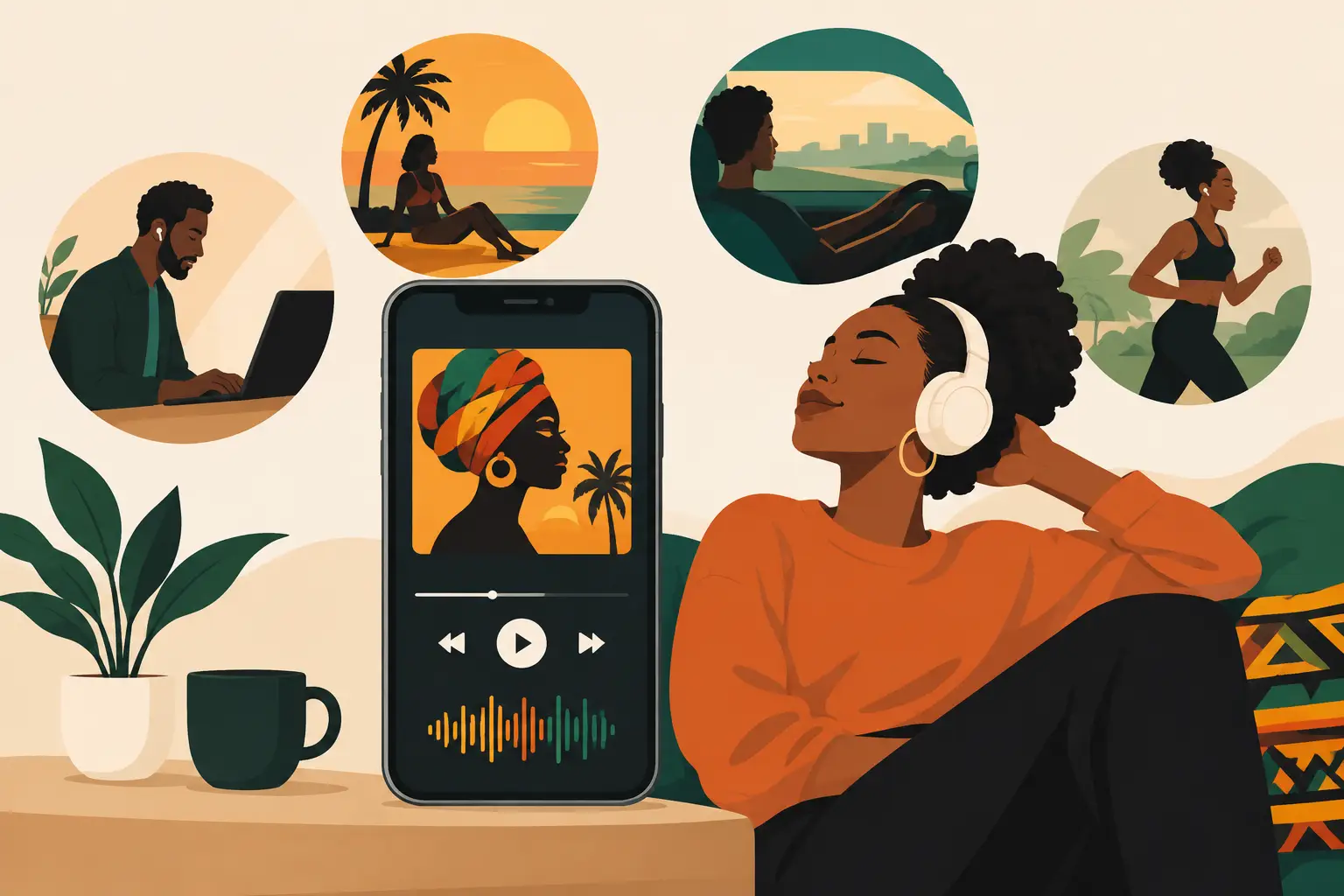
An Apple Music Afro Beat playlist should feel like more than a run of catchy songs. It should catch the mood you walked in with, then carry you somewhere else: from a quiet commute to a loud room, from pressure to possibility, from a long week to one song that makes you feel understood.
That is the real pull of Afro-Beat. The rhythm can move fast, but the feeling underneath can be patient, personal, and honest. A great playlist gives room to both sides. It brings the bounce, but it also makes space for the lyrics, the melody, and the stories behind the voice.
What Makes an Apple Music Afro Beat Playlist Last
The best playlists are not built around a genre label alone. Afro-Beat is wide. One listener may want warm percussion and smooth vocals for a late-night drive. Another may need a song with enough lift to reset their whole morning. Someone else may be looking for an artist who sounds like they have something to prove.
That range is what makes discovery exciting. A playlist can move from established names to independent artists without losing its purpose, as long as every song earns its place. The goal is not to chase every trend or stack the biggest records at the top. The goal is to create a feeling people want to return to.
For listeners, that means paying attention to what stays with you after the beat fades. Maybe it is a hook that follows you for hours. Maybe it is a line that sounds like a chapter from your own life. Those are the records worth saving, replaying, and sharing with someone who needs them.
Start With the Feeling, Not the Algorithm
Before adding songs, decide what the playlist is meant to hold. A playlist for confidence should not open the same way as one for reflection. The first track sets a promise. It tells the listener whether they are about to hear celebration, healing, hunger, romance, or a little bit of all of it.
For a playlist built around ambition, lead with a record that has immediate rhythm but does not rush the listener. Let the opening feel welcoming. Then bring in songs with bigger drums, stronger hooks, and more energy as the playlist finds its pace. If the first three tracks feel disconnected, most listeners will not wait around for the good part.
A reflective playlist works differently. Start with melody and space. Choose a voice that sounds close, as if the artist is talking directly to the listener. From there, you can build toward songs with brighter rhythms and more movement without losing the emotional thread.
The strongest playlists have a point of view. They do not need to be perfectly polished or packed with only familiar tracks. In fact, a few unexpected choices can make the whole sequence feel more human.
Let the Energy Rise Naturally
There is a difference between variety and chaos. Afro-Beat can hold different tempos, languages, production styles, and vocal approaches, but the transitions still matter. Placing five high-energy songs back to back can flatten the experience. The listener stops hearing the individual songs and starts hearing one long blur.
Give the rhythm room to breathe. Follow a club-ready record with something melodic. After a heavy emotional song, bring in a track that feels like release. Think of the playlist as a night with people you trust: there are loud moments, quieter conversations, and a reason everyone stays until the end.
This does not mean every transition has to be soft. A sharp switch can work when it feels intentional. A raw, determined song after a romantic track can change the temperature in the right way. It depends on the story your sequence is telling.
Make Room for Artists Still Building
There is something special about finding an artist before the whole world starts quoting the hook. Emerging Afro-Beat artists often make music from a place of urgency. They are not just filling a release schedule. They are introducing themselves, carrying their history into the song, and trying to turn a personal vision into something people around the world can feel.
That is why independent releases belong beside bigger records. A playlist built only from songs everybody already knows may be easy to start, but it does not give listeners much to discover. Adding newer voices makes the playlist feel alive. It also gives listeners a chance to become part of an artist’s early story.
Rixk Nj brings that kind of direct expression to records such as “Loose Guard,” “Changed Man,” and “Breakfast.” The songs come from a place of growth, pressure, and forward motion – the kind of emotion that fits naturally beside Afro-Beat records made for both movement and reflection.
When you find a new artist you connect with, do not just play one song and move on. Visit the catalog. Listen to the singles in order. Hear what changes from one release to the next. The progression often tells you more than a single track can. You might find a song that fits your playlist better than the one that first brought you there.
Build an Afro Beat Playlist Around Real Life
The most replayable playlists have a use. They become part of a routine, a memory, or a moment someone does not want to explain out loud. Instead of naming your playlist something vague, let the title give it a real purpose. It could be for early confidence, a midnight reset, getting ready with friends, or keeping your head clear after a hard conversation.
A useful Apple Music Afro Beat playlist can change with the listener’s day. Keep a few songs that hit immediately, especially near the beginning. Add mid-playlist tracks with depth, where the lyrics or vocal delivery ask for more attention. Save a few final records that leave warmth behind instead of ending on empty noise.
There is no perfect number of songs. A compact playlist can feel intentional and easy to replay. A longer one works when it is built for travel, work, or a full evening. The trade-off is simple: the longer the playlist gets, the more carefully every addition needs to fit. If a song is good but breaks the mood, save it for another collection.
Trust Your Own Replays
Recommendations can help, but your listening history is still the best filter. If you keep returning to a song, ask why. Is it the percussion? The vocal tone? The way the artist sounds calm even while singing about struggle? That answer can guide the next few tracks you add.
Use artist pages and full projects as part of the search, not just the songs that appear first. Albums often reveal deeper cuts with more personality. Singles can show where an artist is headed next. A playlist becomes more personal when it reflects what you actually listen to, not just what appears on a genre shelf.
It is also okay to remove songs. A playlist is not a museum. Your taste changes, your mood shifts, and new music arrives. Keep the tracks that still mean something. Let go of the ones that only made sense for a week.
Share the Story Behind the Sound
Music travels further when people have a reason to care. If you send a playlist to a friend, do not just say, “Listen to this.” Tell them which track caught you. Mention the song that feels like a win after a difficult season, or the one that makes a regular drive feel cinematic.
That small bit of context turns discovery into connection. It gives the music a place in somebody’s life before they even press play. For artists still growing, that kind of personal recommendation can matter more than a casual scroll past a song.
Keep your playlist close to your real life. Add the record that helps you show up when you are tired. Save the voice that reminds you where you started. The right song will not solve everything, but it can give the next hour a little more direction.
Leave a Reply